Category Archives: News

The Hidden Truth About Racism

We are moving in the direction of a socially unified world.  Races are expressions of consciousness.  They are perspectives.  They are not who anyone is.  But in today’s modern world, discussion about race has become taboo.  As a result, we cannot have the crucial conversations we need to have in order to create a socially unified world.  The time has come to make the topic of race and racism, no longer taboo.

What has never been talked about before is the fact that pain is not just felt by the person on the receiving end of racism.  In fact the root of racism is pain.  We do not develop resistance to a specific race unless we feel as if that race is a threat.  So the question we need to be asking is, what is the perceived threat?  What pain is hiding behind each specific case of racism?  Until we address this pain, we will find no resolution.  But if we find this root and begin to directly address the perceived pain that caused the racism in the first place, we can actually create resolution.

Like it or not, we all hold racial stereotypes.   If we can face these stereotypes and admit to the pain behind them on both sides, racism could actually become a thing of the past.

To read the full article click here

If the mind assigns meaning to racial stereotypes that causes the being to feel threatened, prejudice, discrimination and antagonism is the result” 

www.tealswan.com 

Carl Jung Said We Have Four Stages In Life; Which Stage Are You Experiencing?

Carl Jung was a Swiss psychiatrist, in the early to mid 1900’s, credited with the creation of analytical psychology. His Thought and theories paved the way for modern psychiatric practices. He was also credited with the creation of the archetypes: th complex, extroversion, introversion and the collective unconscious.

He was a prolific philosopher that directly influenced great minds like Joseph Campbell, Herman Hesse, Alan Watts, Erich Neumann and many others. He linked together human’s innate spirituality and linked it to the various sciences. A Review of General Psychology survey named Jung as the 23rd most cited psychologist of the 20th century. One of his theories on the developmental stages of humans, broke down the stages into four general archetypes. How he choose to prioritize life and its processes is fascinating.

The Athlete Stage

shutterstock_343238516This stage is marked by a preoccupation with with physical appearances. We come to grips with how our bodies look.  Here we identify our strengths and begin to develop insecurities.

We use the physical world to begin to ground ourselves in a version of reality. After understanding how people react to us and how that makes us feel, our feelings begin to take priority. This leads into the next stage.

The Warrior Stage

We have come to identify certain feelings with particular actions and patterns. We start comparative thought to maximize what we can get out of situations.

This leads us to want to conquer and impose our will, for the our own good. We strive to be what we consider to be the ‘best’ not for any other reason than to be better than others. We want nothing more than wealth, influence and control.

The Statement Stage

Screen Shot 2016-08-13 at 1.40.24 PM

After chasing down goals to serve your ego, you begin to seek out more fulfilling actions and ways of life. The inherent undercutting that occurs in comparative thought has become apparent. You start to realize that physical aspects of reality are not the way to true happiness.

You realize that there is merit to the physical world but you no longer attribute the same level of importance as before.

Up until this point you have been strengthening your monkey mind and ego. You start to realize that you mind and your desires are the root of what is stopping you from spiritual balance and contentment.

This stage is well marked by a desire to be of service to others. You look for avenues of wisdom that can tame the ego that you have built up.

The Spirit Stage

This stage is the last stage of life, and Jung pointed out that not everyone will get to this point of personal development. In this stage you recognize that everything up till this point was part of the journey and you have not been ‘you’ this whole time. You have been testing the extremes of the human experience.Screen Shot 2016-08-07 at 10.13.22 PM

In the spiritual stage you begin to develop internally as a person. You stop being archetypes and begin to be yourself, knowing that ‘you’ are a constantly evolving concept.  Impermanence is something you now recognize in your day to day life.

After experiencing the extremes of the human ability and life, you can use this experience to your advantage. You can step back from your self and recognize the aspects that make up the sum of what and who you are.

9 Great Lessons Modern Humanity Has Forgotten

As technology and society grow in scope, we as a species become more disenchanted and dependent on these aspects we create. We as a race have forgotten more than we currently know. What was important to know two hundred years ago, is still important today, even if only to track our progress.

Forgot Our Place In Nature

As humans we are a part of nature. Striving to move away from our ‘baser’ instincts and beastly nature, we have disconnected from nature.  We haven’t just disconnected, we have brought serious disbalance to our natural environment. Our cooperation with nature is no longer tied to our survival, so we no longer pay attention to the effects of our actions.

We Forgot Our Connection To Life And The Cosmos

In modern times, we have gotten tied up in plastic pursuits and concerned only with our placement in societal hierarchies. We don’t treat the miracles of life the same as we with the same awe and reverence we used to. This lack of respect has back fired in the form of us no longer being naturally in tune with the cosmos.

We Forgot Our Wisdom

Through the ventures of acquiring and categorizing as much information as we can, we’ve lost the common sense to use that information well. Wisdom is not as publicly sought out after as it was in past times. We’ve mistaken the ability to do something with the right to do it.

We Forgot Our Purpose

Through the mechanations of this century we have lost track of voices that are supposed to guide us. We try harder to fit our lives into grand blanket theories rather than try to  find theories that apply to us as individuals. The increase in population has increased the noise and changed the statistics of what once worked.

We Forgot To Love And Forgive

It is not natural for people to be friendly and love another. We forgot that everything is energy and love is the most powerful energy known. Without love there can’t be forgiveness.  With out forgiveness, mistakes and trespasses are give rise to more anger and resentment. We are stuck in this cycle of war because of a lack of love and forgiveness.

We Forgot To Be Free

Everyday and every moment you have the right and ability to be free. We forget this often. We are bound by our fears, desires, and material possessions. We are made to believe that the sliver of control the governments and religions allows us, are worth the time and freedom we give them. Any person or institution that has power over us, only has that power because we gave it to them.

We Forget The Lessons From History

The past is a scary and haunting concept in today’s society. The mistakes of our past are never truly reconciled or clearly examined. We rush from one mistake to the next, and with each mistake we become more reckless.

We Forgot Simplicity

Society gets more and more complicated, in answer to the growing number of humanities issues, and we have started to think everything has to be complicated. Life grows more complicated if we don’t take strides to simplify it. We have to actively simplify the aspects of our life to combat how complicated our minds naturally make things.

We Forgot To Trust And Have Faith

This is the era of ‘prove it’ mentality. We won’t trust anything that isn’t proven in a laboratory. We trust facts over our own intuitions. Facts can be framed to support any idea or theory. Here is lies the problem, without faith we are unrepentant skeptics with cynical views. Nothing can get better with out faith or some form of positivity.


9 Signs You’ve Met Your True Soulmate

We are all searching for many things in life, and one of the biggest is our soulmate. This is the person who completes us and helps us reach goals we never thought possible. They help us forgive and love ourselves when we can’t. Together as a team the realm of influence and experience exponentially grow.

Easily Recognized

As soon as the two of you met there was, at the very least, A suspicion of this character being the ‘one’ for you. Both of you can see it and express this possibility with one another without directly mentioning it. Taking a leap of faith, both parties opened up to each other and found soulmates.

You Have The Same Haunts

You both have the similar interests and interconnected wavelengths, You’ve been connected to this person far before you physically met. Ask your soulmate and you’ll see, you both have been to a lot of the same places at different times.

You Met At The Right Time

It may not be the perfect time of your life in other aspects but it was the perfect time to meet the love of your life. It could have a relatively stress free time in your lives or it could have been a particularly rough patch for both or one of you. Regardless of the ‘how’, the scenario surrounding your meeting went, it helped to make room for one another.

The Silence Spent Between You Is Comfortable

All you need to feel comforted, id hid or her mere presence. The silence provides a different back drop for ‘viewing’ your partner. You can sit in each other’s silent presence for hours.

You Recognize Each Other’s ‘Flaws’ And Work With Them

Everyone has ‘imperfections’ or ‘flaws’. Through love and compassion these aspects are seen as simply traits that society has deemed one way or the other. Your soulmate doesn’t see these other definitions, only the beautiful and capable you.

You Can Drop Your Shields Around Each Other

There is no need to be ‘on your guard’ when your with this person who loves you so much. Their natural instinct will always be to protect you. If they have proven that you are not their top priority, or they would not go out of their way to protect you, then you should really examine your relationship.

You Have Similar  Life Goals And Interests

The two of you  naturally fit together like a hand in a glove. You both prioritize life in similar if not exactly the same. You work as a team so if one of you wants it, the other will delight in helping to achieve it.

The Desire To Spend Time Alone Isn’t Threatening

Same as you two can pass away time in silence with one another, you don’t need to be with each other 24/7. This doesn’t mean that you don’t want to, just that your team can work separate from another.

You Challenge One Another

Growth occurs from enduring hardships. Knowing this, dome pf the strongest relationships are constantly challenging one another. This a safe way to test convictions and ideas.

You Grow As A Team

It’s important that people be given space and time to grow. If we don’t actively and consciously grow, we stagnate. the same is true of the entity that the two of you form as a team. Each person needs to be given every possibility to grow but that person needs to keep in mind the other individual’s growth. If one person is growing and the other isn’t, something is very wrong.

You Can Talk About Anything

Since there is no judgement between you, there should be unfettered communication. In fact the more two people communicate on varied subjects, one’s that make them nervous, ones that make then sad, or happy, the more in depth the other person’s knowledge will grow.

Zen Garden – Genesis of Peace & Serenity

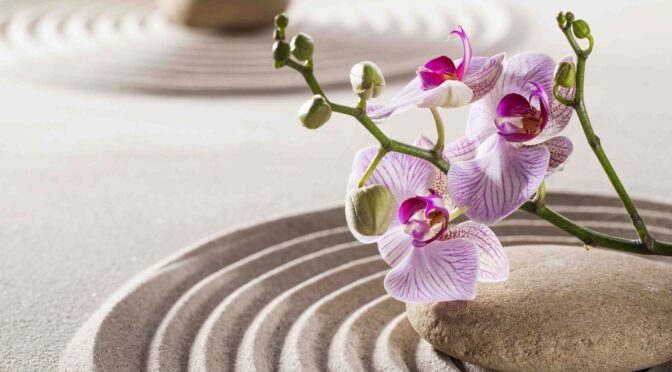
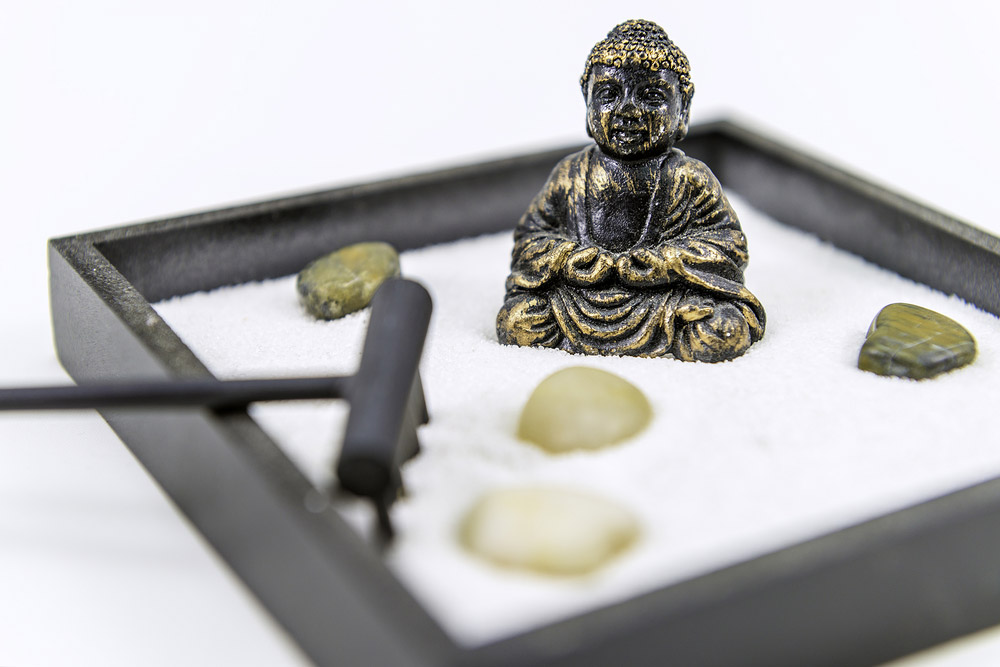
Have you ever seen a zen or Japanese rock garden? Did it bring you a sense of peace and serenity? The Japanese rock garden or “dry landscape” garden, often called a zen garden, generates a miniature stylized landscape by means of carefully composed arrangements of stones, water elements, moss, pruned trees along with bushes, and makes use of stones or even sand which can be raked in order to symbolize ripples in water. A zen garden is usually fairly tiny, enclosed by a wall, and is also commonly meant to be looked at whilst seated from a single point of view outside of the garden, such as the porch of the hojo, the residence of the chief monk from the temple or monastery. Classical zen gardens were made at temples of Zen Buddhism in Kyoto, Japan throughout the Muromachi Period. They were designed to imitate the meaningful substance connected with mother nature, not its true physical appearance, and to serve as an aid to meditation about the true meaning of life.

zen garden 2 cropped

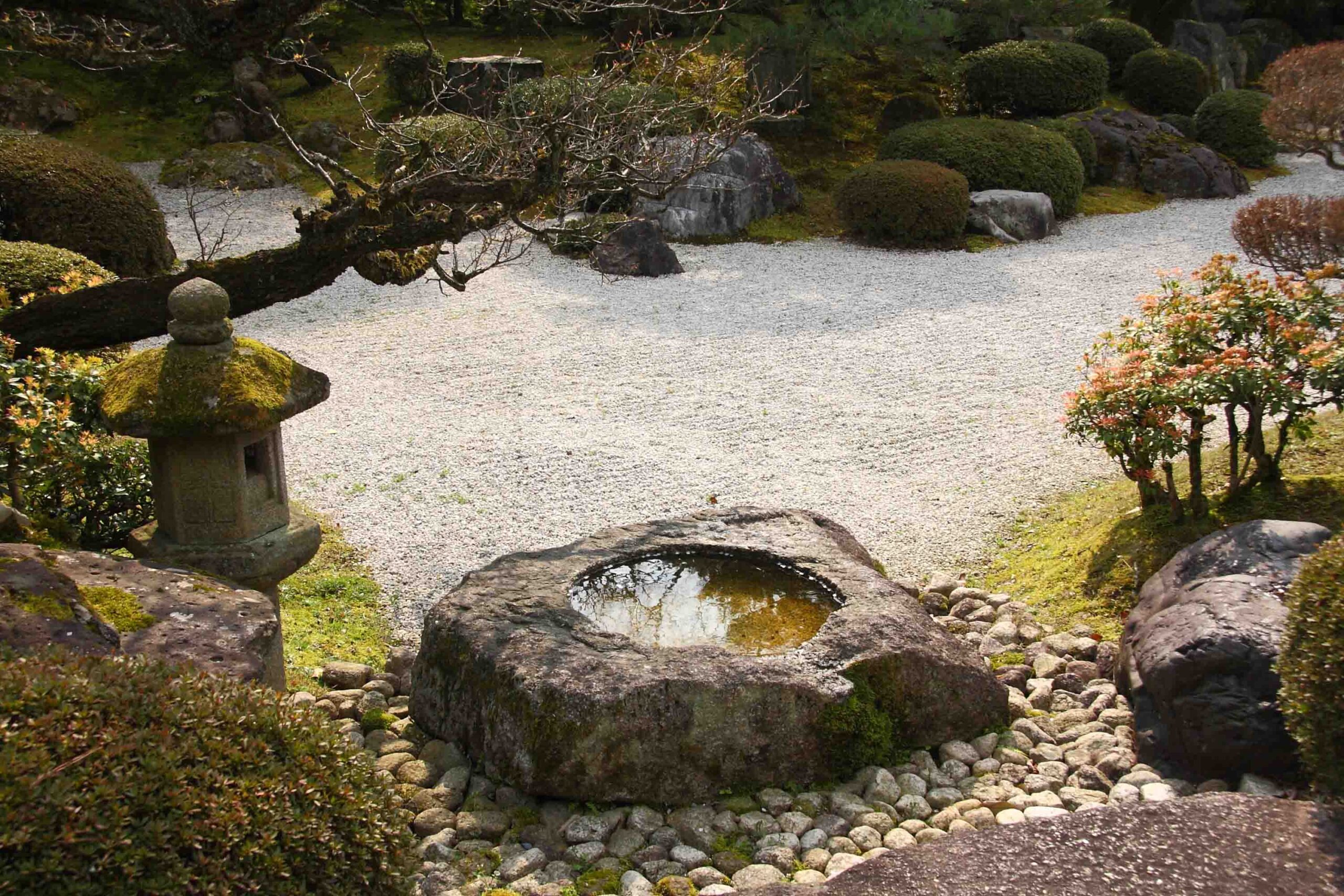
Rock gardens existed around Japan at least since the Heian Period (784-1185). These early gardens were detailed inside the very first manual of Japanese gardens,  written at the conclusion of the 1200’s. They were largely copied from the Chinese gardens of the Song Dynasty (960-1279), where groups of rocks symbolized Mount Penglai, the legendary mountain-island home of the Eight Immortals in Chinese mythology, known in Japanese as Horai. The manual described precisely how rocks need to be placed. In one verse, was written: “In a place where there is neither a lake or a stream, one can put in place what is called a kare-sansui, or dry landscape…” This kind of garden featured either rocks placed upright like mountains, or laid out in a miniature landscape of hills and ravines, with few plants. He described several other styles of rock garden, which usually included a stream or pond, including the great river style, the mountain river style, and the marsh style. The ocean style featured rocks that appeared to have been eroded by waves, surrounded by a bank of white sand, like a beach. White sand and gravel had long been a feature of Japanese gardens. In the Shinto religion, it was used to symbolize purity, and was used around shrines, temples, and palaces. In zen gardens, it represents water, or, like the white space in Japanese paintings, emptiness and distance. They are places of meditation.

zen garden 3 cropped

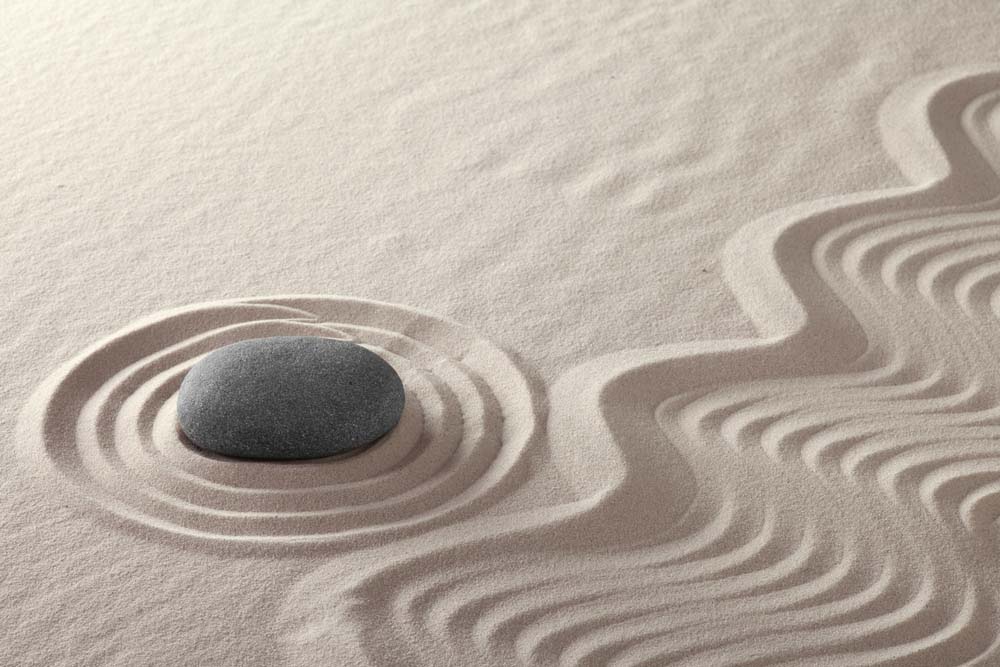
A zen garden is without a doubt a sanctuary that can be placed in nearly any living space. Some zen gardens are massive creations that can consist of massive areas, while many are tiny desktop gardens that use up no more room than your notebook. It’s not difficult to create a constantly changing work of art that is visually pleasing with clean, flowing lines and carefully placed objects. Best of all, a small zen garden is incredibly inexpensive to create! It will also show your unique style of rocks and sand patterns. The selection and placement of rocks is the most important part of making a Japanese rock garden. Different types of rocks are used for creating different symbolic things like mountains, rivers or seashores.The act of raking the gravel into a pattern recalling waves or rippling water, known as samon has an aesthetic function. Zen priests practice this raking also to help their concentration.These gardens are conceived and created from the meditative inspiration of the gardener, and contemplating one is a doorway to meditation for the viewer. While no rule exists against including plants and water features, many gardens omit them entirely and construct the garden from rocks and gravel to evoke emptiness through abstraction.

zen garden 4 cropped

You don’t have to do a lot to keep your rock garden looking good. Sand and stones don’t degenerate or need food or water – so there is nothing you have to do there. Of course, you will have to care for whatever plants or trees are in your rock garden, but usually just a little water and plant food will suffice. Keep your rock garden free of debris and you’re good to go! This world can be busy and frantic – an individual should have just a little serenity. A Zen rock garden could be just the thing you need to help you relax and re-enter the world full of energy and vigor!


A Beginner’s Guide To Understanding Your Chakras

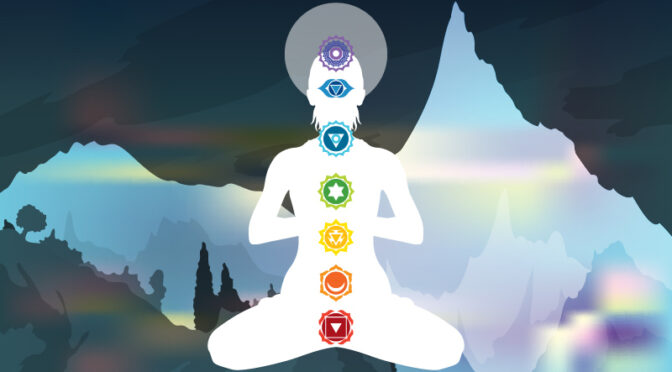
Chakras are energy points in specific places in the body that directly effect our being on multiple levels of existence. As the West comes to embrace Eastern philosophies and practices, chakras have become a topic of debate for many people.  The chakras govern physical and intangible aspects of ourselves. Noticing them not spinning in alignment will have physical and spiritual sypmtoms.

There are ways to nurture them directly, but by treating the symptoms you can realign the source. There are seven main chakras in the body and like most formations of the body, they can fix themselves to an extent.  The  more you practice with them and actively care for their maintenance, the better they will function. The chakras are normally visualized as spinning balls of energy located along the spine at specific junctions.

Even if you don’t subscribe to notions of spirituality attached to chakras, they are still a great way to group together and connect physical, mental and emotional aspects of your being. There are many ways to correct the alignment of chakras, according to many schools of thought and disciplines. You can also ‘free style’ it as your connection and awareness build. Chakras are immersed in every aspect of our being, so there are many ways to effect them.

From music, to ecstatic dance action and intent can harmonize and bring dis balance to your life. I’ve listed the major chakras in ascending order with general information on each. Keep in mind that chakra energy flows from the bottom upward. So you may see issues with your throat chakra but you need to make sure all the chakras preceding it are in line first. Keep your eye out for the intermediate guide, in which we’ll specifically diagnose unhealthy chakra symptoms and how to fix them. Keep in mind that a basic visualizing meditation can go a long way in fixing the chakras.

Root aka Muladhara

The lowest chakra, it is our grounding force, that which ties us to the present and affirms our connection to the planet. Beyond the intangible ability to emotionally ground oneself, the root chakra is a reflection of and the control center for the digestive, reproductive and immune system. Corrective actions include any lower core, squats and stomping your feet.

Location: Base of spine
Sense: Smell
Element: Earth
Stones: Black onyx, hematite, carnelian, garnet
Color: Red or black
Sound: Do
Musical Note: C

Sacral aka Svadisthana

This chakra is a reflection and controlling force for creative output, sexuality, ethics, interpersonal relationships and a sense of honor. Physically it is a reflection and controlling force  for the reproductive and urinary systems. Exercises for this chakra are pelvic thrusts and circular movements.

Location: Underneath the ribcage
Sense: Taste
Element: Water
Stones: Orange agate, Red jasper
Color: Orange
Sound: Re
Musical note: D

Solar Plexus aka Manipura

Manipura is a powerful factory of chakras. You channel and create your self-esteem and emotional control through this juncture.  Physically it monitors and regulates your metabolism, upper digestive track, and sympathetic nervous system. Methods for strengthening this chakra are twisting movements and hula hooping.

Location: Middle abdomen area
Sense: Sight
Element: Fire
Stones: Tiger’s eye. Citrine, yellow stones
Color: Yellow
Sound: Mi
Musical Note: E

Heart aka Anahata

Anahata regulates and reveals your confidence, empathy, familial love, forgiveness and relationships. If you’ve been having trouble loving yourself or expressing love to others this is the junction you want to mind. If you recongize the need for major healing, you’ll want to keep a close eye on Anahata. In the physical sense it governs circulation, the heart, immunity, and respiratory systems. To help balance this chakra try swimming, hugging and massage.

Location: Center of the chest
Sense: Touch
Element: Air
Stones: Jade, Rose quartz
Color: Green or pink
Sound: Fa
Musical note: F

Throat aka Vishudda

Vishudda is the focal point for honesty, communication, self expression, recognizing and expressing truth, and will power. This chakra is very commonly over used or ‘pushed too far’. While it gets out of alignment easily, it also corrects with simple steps.  In a physical sense, a healthy throat chakra will improve sore throats and Thyriod issues. People with addiction issues will want to take special care to keep Vishudda spinning correctly. Some ways to keep your throat chakra healthy is to scream, yell, laugh, and gargle salt water. You can also write a letter to yourself, or others. If you truthfully express yourself with compassion it will help re align Vishudda.

Location: Throat area of neck
Sense: Hearing
Element: Ether
Stones: Lapis lazuli, turquoise
Color: Sky blue
Sound: Sol
Musical note: G

Brow/Third Eye aka Ajna

Ajna is also referred to as the Third Eye, and is the gauge of mental health, intellectual processes, intuition, dreaming, and visualization.Spiritual and mental powers are believed to be housed here.The prominent physical aspects are the brain itself, the eyes, and central nervous system. Some ways to improve Ajna’s health are active or lucid dreaming and abstract visualization.

Location: Between the eyes
Sense: All the senses including psychic ability
Element: Light
Stones: Amethyst, Moonstone
Color: Purple
Sound: La
Musical Note: A

Crown aka Shasrara

The highest chakra, Shasrara is linked to and governs your spiritual awareness/health, along with connections to other people, the universe and a higher power. Before working on this chakra remember that energy flow from the bottom up. It is crucial to align your other chakras before working on this one. Physically it is tied in with the central nervous system and general well being. the balancing methods for this chakra include meditation, yoga,and productive thought.

Location: Top of head at the crown
Sense: All senses including consciousness
Element: Will
Stones: Moonstone, clear quartz, amethyst
Sound: Ti
Musical Note: B